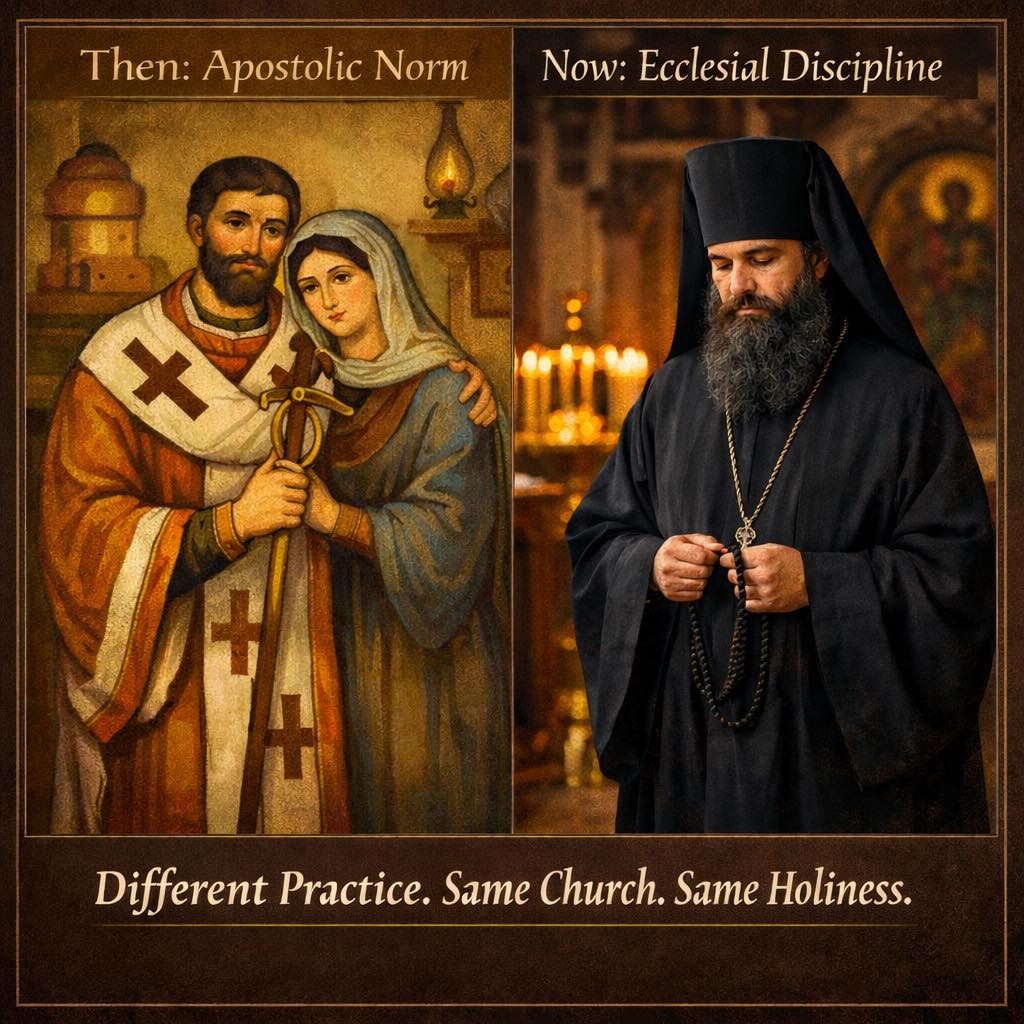
Married Orthodox Bishops
Were Bishops Married in the Early Church?
I was recently asked this question, so I want to take a look objectively at the historical record.
Some are surprised to learn: yes, many bishops in the early Church were married.
This isn’t speculation—it’s written plainly in Scripture and confirmed in the canons of the early councils.
St. Paul writes, “A bishop must be the husband of one wife…” (1 Timothy 3:2). Not only was marriage permitted—it was assumed. That’s not a loophole. That’s apostolic norm.
At the First Ecumenical Council in Nicaea (325 AD), the Church didn’t forbid bishops from being married. Rather, it placed boundaries around who could live with them—presuming, not prohibiting, marriage.
Even more striking? The Council of Gangra (340 AD) anathematized those who claimed that married clergy were impure. Yes—anathema for denying the holiness of married priests and bishops.
Saint Gregory the Elder was both a bishop and a husband. Synesius of Cyrene, too. Neither were exceptions. Their marriages weren’t tolerated—they were honored.
So what changed?
Over time, the Church adopted the discipline of drawing bishops from the monastic and celibate ranks.
This was not a rejection of the past but a shift in emphasis. It was economia, not dogma.
But here’s the challenge: when a disciplinary change becomes a long-standing norm, it often hardens into something more.
Culture forms habits. And habits form expectations.
What began as pastoral practice can start to feel like doctrine.
And that raises a deep question: if we no longer live according to the canons—can we still claim their full authority?
The Church has always taught with both truth and tenderness.
Let’s remember what the Scriptures and early councils affirmed: holiness is not dependent on marital status.
In fact, the sacrament of marriage is itself holy.

