Primacy, Power, and the Cost of Unity in the Orthodox Church
Brothers and Sisters in Christ,
Today, Orthodoxy is experiencing a profound transformation. It is being reborn through pain and forged through fire.
We can observe the growing fracture between Constantinople and Moscow and wonder where it will lead. This rupture is not rooted in heresy, but in contested authority, wounded history, and geopolitical conflict. At any moment, these two powerful patriarchates could declare formal schism and tear the Orthodox world in two.
Then what follows?
Disunity. Brokenness. Disconnection.
The rupture between Constantinople and Moscow is not a clean break, but a fractured communion. One Body, but not one chalice. One Faith, but contested structures. One Lord, but a deeply wounded unity.
Beneath the surface of this widening division lies a deeper struggle. What does primacy truly mean in Orthodoxy? Can unity be preserved through conciliarity, or has our communion been compromised by centuries of ecclesial appropriation and entanglement with state power?
This past week, the Russian Foreign Intelligence Service (SVR) released a public statement denouncing Ecumenical Patriarch Bartholomew in scandalous and profoundly uncharitable terms. Its language, including the phrase “Antichrist in a cassock,” was not merely provocative. It revealed a spiritual sickness that treats the Church as an ideological battlefield rather than the Body of Christ.
At the same time, some Orthodox voices have offered a sharply different historical interpretation. They argue that what we are witnessing is not disruption initiated by Constantinople, but the long-term consequence of Moscow’s ecclesiology. In their view, this vision was built not on communion, but on coercion.
In a widely shared essay, Elias Damianakis critiques what he sees as a pattern of ideological laundering through numerous online Orthodox outlets (which I shall not mention by name). He warns against what he calls a “Protestant-Orthodox” posture, marked by self-authorized platforms, unaccountable bishops, and a Russo-centric piety that replaces conciliar Orthodoxy with state-aligned theocracy.
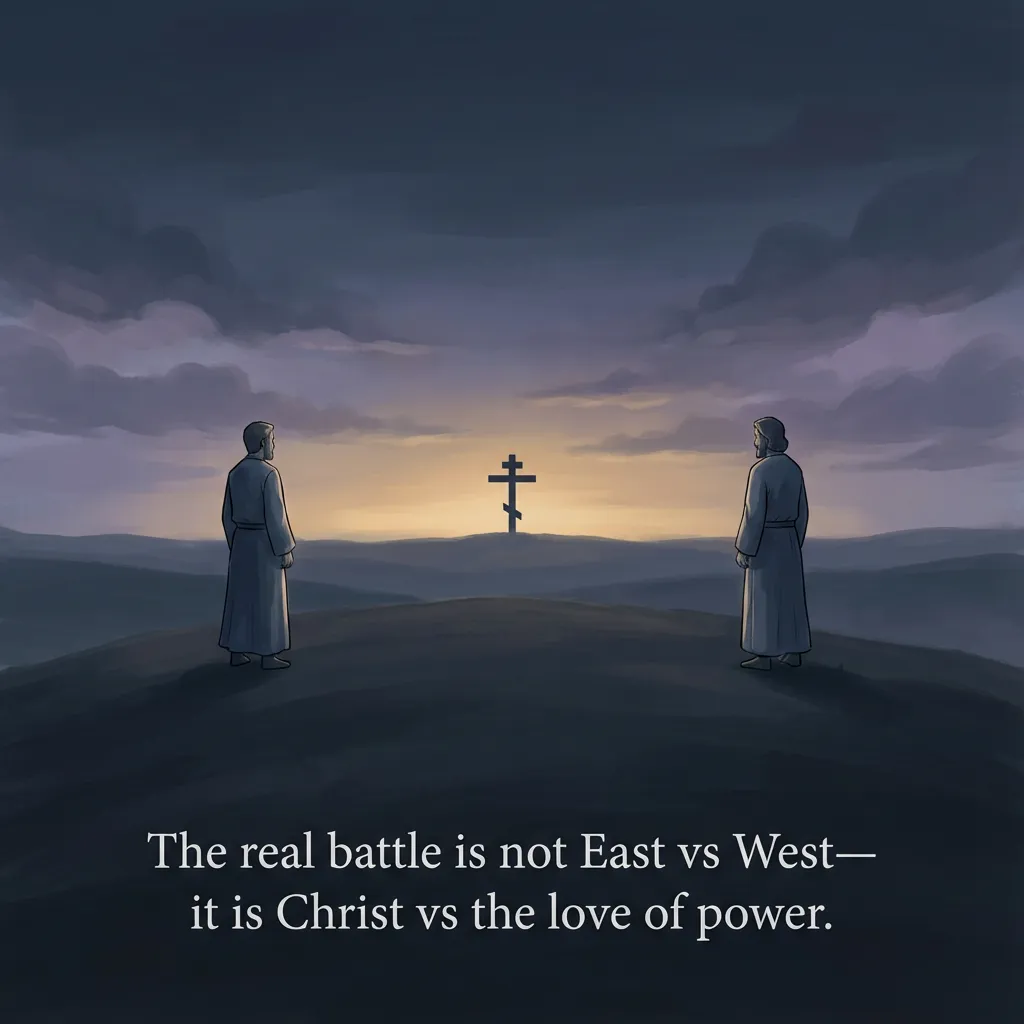
This is a strong and controversial critique. Yet it reflects what many feel deep in their bones. The true conflict is not East versus West, Greek versus Slavic, or even Moscow versus Constantinople.
The real struggle is the temptation to reshape Orthodoxy in the image of power rather than in the likeness of Christ.
So what are we to do?
We must resist propaganda, whether crafted by the state or cloaked in pious branding.
We must reject rhetoric that uses the name of Christ to justify division.
We must pray fervently for our bishops.
And we must cling to the Cross, where true authority is revealed not through domination, but through suffering love.
As the American Orthodox Catholic Church faces its own external challenges from some within the Orthodox world, we find ourselves more united than ever.
We are an American Orthodox Church. We are not Russian, Greek, Antiochian, or any other expression of ethnic Orthodoxy.
We pray for restoration and unity. We remain faithful to serving those entrusted to our care. We stand ready to establish new parishes, expand our clergy, and meet the needs of our time in service to our Lord Jesus Christ.
We cannot control what happens in other jurisdictions or what they say or do. Their conflicts are not our conflicts.
Our calling is to remain faithful to Christ, to our communities, and to one another.
Come and see.
Peace and Grace,
Father Don Purdum
Press Secretary
American Orthodox Catholic Church (AOCC)

